13515 Steele Creek Rd Suite 213, Charlotte, NC

When Should Your Child See an Orthodontist

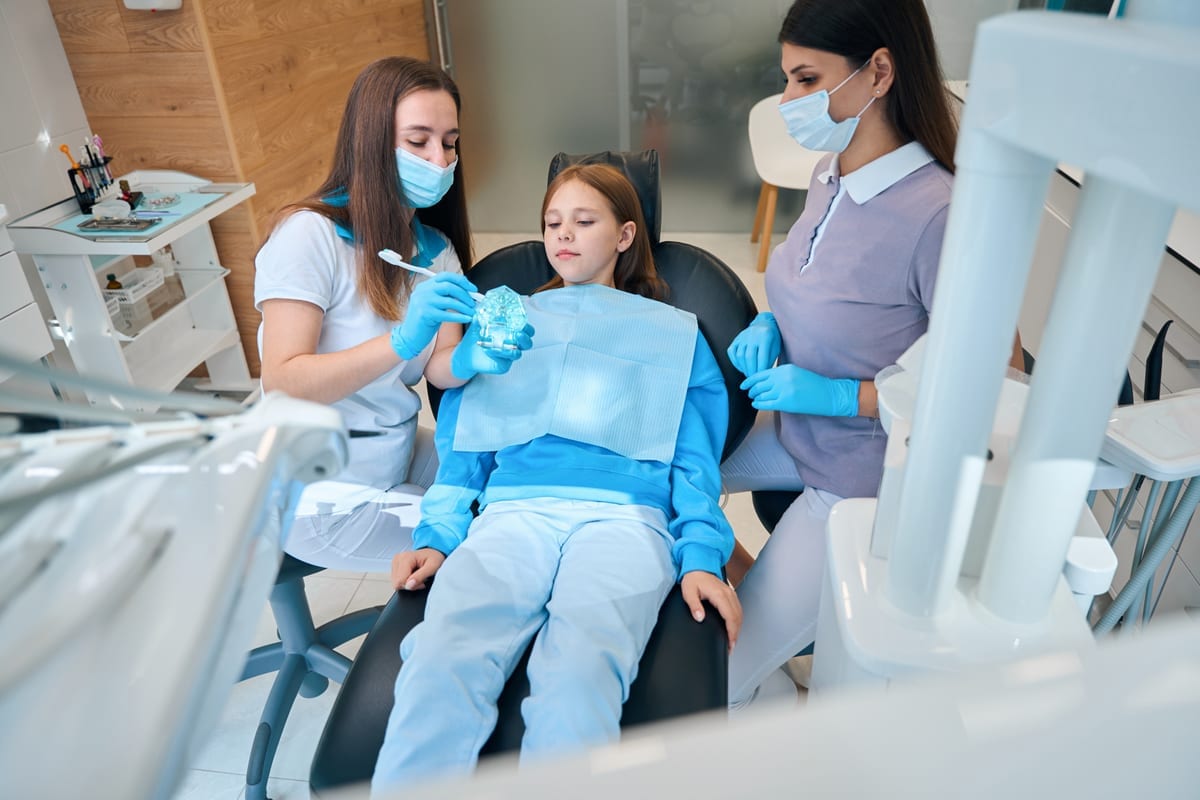
Many Charlotte parents wonder when should your child see an orthodontist. The answer may surprise you — it’s earlier than most people think. Catching alignment problems early can save your child from more complex treatment later. At Pure Hearts Pediatric Dentistry, Dr. Jessica Simon helps families understand the right timing for orthodontic evaluation.
This guide explains the recommended age for a first orthodontic visit. It also covers what early evaluations look for and which warning signs you can spot at home. Understanding this information now puts your child on the path to a healthy, confident smile.
The American Association of Orthodontists Recommends Age 7
Most parents assume braces are a teenage concern. However, the American Association of Orthodontists recommends a first orthodontic screening by age 7. At this age, your child has enough permanent teeth for a meaningful evaluation. A trained eye can detect problems that are not yet visible to parents.
By age 7, the first permanent molars have typically come in. These molars establish your child’s bite pattern. An orthodontist can assess how the upper and lower jaws fit together at this stage. Early detection opens the door to simpler, more effective treatment options.
Keep in mind that an evaluation at age 7 does not mean treatment will start right away. Many children simply need monitoring for a year or two. The goal is to identify issues before they become harder to correct. Timing is everything in orthodontic care.
What a Phase 1 Orthodontic Evaluation Looks For in Charlotte Kids
A Phase 1 evaluation — also called an interceptive evaluation — happens between ages 6 and 10. It focuses on jaw development, bite alignment, and spacing. Orthodontists use X-rays, photographs, and clinical exams during this visit. The goal is to catch problems while the jaw is still growing and flexible.
During the evaluation, the orthodontist checks for several key concerns:
- Crossbites — when upper teeth close inside lower teeth
- Underbites — when the lower jaw protrudes forward of the upper jaw
- Crowding — when there is not enough space for permanent teeth
- Excessive spacing — large gaps between teeth that may signal a missing tooth
- Deep bites or open bites — bite patterns that affect chewing and speech
- Jaw asymmetry — uneven jaw development that worsens with age
If any of these issues are found, our orthodontist in Charlotte will start Phase 1 treatment. This might involve expanders, partial braces, or other appliances. Phase 1 treatment typically lasts 9 to 18 months. Phase 2 treatment, if needed, happens later when most permanent teeth have erupted.
Early Warning Signs Parents Can Spot at Home
You do not need to be a dentist to notice potential orthodontic problems. Several signs are visible if you know what to look for. Catching these early gives your child the best chance at interceptive treatment. Here is what to watch for as your child grows.
- Mouth breathing — breathing through the mouth, especially during sleep, can affect jaw development
- Thumb sucking or pacifier use past age 3 — prolonged habits can push teeth forward and narrow the palate
- Difficulty chewing or biting food — this may signal a misaligned bite
- Speech problems — lisping or difficulty pronouncing certain sounds can be bite-related
- Crowded, misplaced, or blocked teeth — teeth that appear crooked or out of position
- Early or late loss of baby teeth — losing baby teeth too soon or too late affects spacing
- Jaws that shift, click, or make noise — this can indicate a developing bite problem
If you notice any of these signs, schedule an evaluation promptly. You do not have to wait until your child is a teenager. Early action almost always leads to better outcomes. Trust your instincts as a parent — if something looks off, it is worth checking.
How Pure Hearts Pediatric Dentistry Supports Orthodontic Readiness in Charlotte
Dr. Jessica Simon and the team at Pure Hearts Pediatric Dentistry monitor your child’s dental development at every visit. We track tooth eruption patterns, jaw growth, and bite alignment over time. When we see early warning signs, we refer families to trusted orthodontic specialists in Charlotte. Our role is to make sure your child arrives at that referral at exactly the right time.
Pediatric dentists and orthodontists work closely together. Regular checkups at our Charlotte office help ensure nothing gets missed. We also educate parents on habits — like thumb sucking and pacifier use — that can impact orthodontic outcomes. Preventive guidance now reduces the need for more invasive treatment later.
The benefits of partnering with a pediatric dental team for orthodontic readiness include:
- Consistent monitoring of jaw and tooth development from infancy onward
- Early identification of habits that affect bite alignment
- Timely referrals to orthodontic specialists at the right developmental stage
- A familiar, comfortable environment that reduces dental anxiety for your child
- Coordinated care between your pediatric dentist and your child’s orthodontist
What Happens If You Wait Too Long
Delaying an orthodontic evaluation can make treatment more complicated. The jaw is most responsive to guidance during childhood. After the growth years, corrections often require longer treatment times. In some cases, delayed treatment may involve more intensive interventions.
For example, a crossbite caught at age 8 can often be corrected with a palate expander in months. The same crossbite left untreated until age 14 may require jaw surgery. Early treatment takes advantage of your child’s natural growth process. That growth window closes as children move into adolescence.
Waiting is not always the wrong choice — some children genuinely need monitoring rather than early treatment. But that determination should be made by a professional, not by default. An evaluation gives you the facts you need to make an informed decision. Knowledge is the first step toward the right care plan.
Conclusion: Give Your Child’s Smile the Right Start
Understanding when your child should see an orthodontist in Charlotte is one of the most important steps you can take as a parent. The recommended age is 7, but warning signs can appear even earlier. Dr. Jessica Simon and the Pure Hearts Pediatric Dentistry team are here to monitor your child’s development and guide you every step of the way. Early evaluation leads to better outcomes, simpler treatment, and a healthier smile for life. Book Now to schedule your appointment with our team.
Frequently Asked Questions
At what age should my child first see an orthodontist?
The American Association of Orthodontists recommends a first orthodontic screening by age 7. At this age, your child has enough permanent teeth for a thorough evaluation. An orthodontist can identify developing problems while the jaw is still growing. Early evaluation does not always mean early treatment — many children simply need monitoring.
What is a Phase 1 orthodontic evaluation?
A Phase 1 evaluation is an interceptive assessment done between ages 6 and 10. It examines jaw growth, bite alignment, spacing, and tooth development. The orthodontist uses X-rays, photographs, and a clinical exam to gather information. If a problem is found, Phase 1 treatment may begin to guide development before all permanent teeth arrive.
Can my child’s pediatric dentist refer us to an orthodontist?
Yes. Pediatric dentists like Dr. Jessica Simon closely monitor your child’s dental development at every checkup. When signs of potential alignment issues appear, we refer families to trusted orthodontic specialists in Charlotte. Regular visits to Pure Hearts Pediatric Dentistry help ensure your child is referred at exactly the right time.
Does thumb sucking really affect my child’s teeth and bite?
Yes, prolonged thumb sucking or pacifier use past age 3 can affect tooth position and jaw development. These habits can push the front teeth forward and narrow the upper palate. The longer the habit continues, the greater the potential impact on bite alignment. Stopping the habit early significantly reduces the risk of orthodontic problems.
What is the difference between Phase 1 and Phase 2 orthodontic treatment?
Phase 1 treatment occurs during early childhood, typically between ages 6 and 10, and addresses jaw and bite development issues. It uses appliances like palate expanders or partial braces to guide growth. Phase 2 treatment happens later, usually in the early teen years, and focuses on aligning the permanent teeth. Not every child needs both phases — some go directly to Phase 2 when they are older.


Ready to Get Cozy in Our Space?
We are here to provide a positive and comfortable dental experience for your child (and you!)